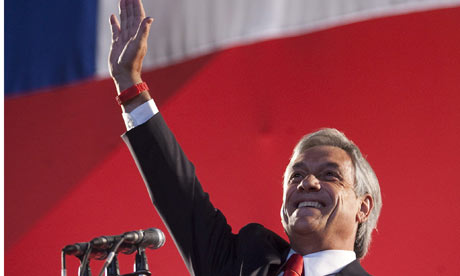
The student protests in Chile took place in March 2011 when the period of popular manifestations became known as the “Chilean winter.” Now, they have witnessed a winter sequel, as a second round of protests was launched in March 2012. These were led by Camilla Vallejo, a 24-year-old student activist and head of the Young Communists of Chile, and president of the University of Chile Student Federation (FECH). The expression of student disenchantment has been manifested in rancorous protests. These cries of despair have managed to rally about 40,000 students calling for a reconstruction of the country’s educational system. The bulk of the country’s students and their supporters have consistently accused the government of having drowned public education services under private market goals, as Chile’s available universities are mainly privately owned.
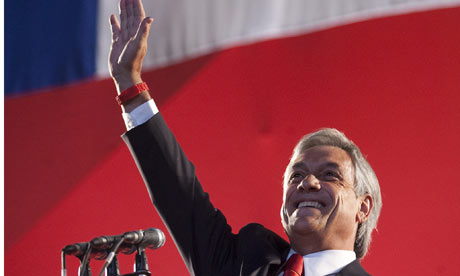
Source: Yahoo Images
Not surprisingly, the police answered to the uprising with a surplus of violence. “For many, this use of force has been seen as excessive and unnecessary” reported Al Jazeera. The uprising resulted in the exchange of rocks and tear-gas between students and the police, according to the BBC on March 6, 2012, and Amnesty International urged an investigation into claims of “an excessive use of force, the unwarranted use of tear gas, the use of metal pellets and possible arbitrary arrests.” The persistence and devotion of youthful agitators, led by a leftist leadership and crowds prepared to stand up to authorities must be hailed for its ongoing political courage.
In accordance with Article 26 of the Universal Declaration of Human Rights, which stipulates that “everyone has the right to education” and that elementary education shall be free and compulsory, Santiago has tried to follow these ideals, as the 1980 constitution drafted under the Pinochet government made attendance at primary and secondary school mandatory for all Chileans. However, the country has failed to complete the engrossing Article 26 of the DHR which also stipulates that “higher education shall be equally accessible to all on the basis of merit.”
Indeed, Chile’s education system is known to be among the most highly privatized in the world, making it only marginally accessible to the general public. Subsidized as well as non-subsidized private schools, which host 48% of Chile’s students, are charging tuition fees, as are many public schools that are controlled by private corporations. According to the Organization for Economic Co-operation and Development (OECD), nearly 40% of all education spending in Chile comes from tuition fees and only 16% from higher education spending comes from public sources.
It is highly important to underline that education is a common good that contributes to the full development of the individual; as Malcom X said, “Education is the passport for the future,” and should therefore be reachable by anyone. The pertinence of an educational system must freely and evenhandedly distribute services to compensate for the inequalities between incomes, areas of residence, genders, and memberships in racial or ethnic groups. Efforts should be made to pay attention to the needs of the general population, and to convert schools into a tool for economic and social development. Study loans cannot easily be afforded as the interest rate on repayment is far above the ground. Equal opportunity for high quality education concerns all students, and is one of the key factors for academic success. Unfortunately, according to UNESCO, Chilean President Sebastian Piñera, in office since March 2010, spent only a low 4.2% of the country’s GDP on education, which is not enough and stresses the portrait of an inadequate public system.
It may be that matters are finally progressing as the Minister of Education, Harald Beyer, and President Piñera, announced on April 23, 2012 that reforms will be implemented. Indeed, to calm down the mass fever protests, Piñera has proposed to reduce the students’ loans interest rate from 6% to 2%. Additionally, loans and scholarships will be extended gradually, depending on the economic background of the student. This measure is a positive first step in reducing social gaps in Chilean society. President Piñera announced recently on national TV a tax overhaul project targeting private businesses, aiming to inject more than $700 million into the educational system. This transition from private to public is the continuation of the February 2010 call upon government officials to withdraw their affiliation to private companies, consequently renouncing fiscal means, aimed at reducing the elites’ economic power. However, the overhaul tax reform has yet to overcome the barrier of required approval by Congress. These new social promises are welcomed with suspicion by the students, and with skepticism by Chilean economists, but it is in Piñera’s interest to harvest mass support in time for the 2013 elections.
Dear Emma
I just answered the same letter to a journalist al wall Street Journal, and that I am coping to you so people can have a better understanding of what is really happening in Chile.
I find fascinating your article but let me provide you a very brief overview of the political reality of Chile. After the military regime that governed the country until 1990, Chile has democratically elected its presidents and has transitioned to a society where, in appearance, democracy prevails. Though this is true in many ways, there is an ever increasing resentment by the general public that our authorities from the private and public sector, politicians, both those in government, and in the opposition, are a well established groups of people that are more interested in perpetuating the establishment they have created, than really addressing the needs of the more unfortunate ones and the country in general.
Over the last years the country has witnessed several major scandals related to corruption, not only to discover that after major public outcries by the politicians of all colors, nothing really happens. Not even mentioning the scandals in the private sector like the “La Polar” case.
On occasions some lower level civil servant may serve some time in jail and some minor changes in legislation may be enacted, though they do little to really solve the problems. I think this is just one of the areas of the many that need reform. Seeing that there is an increasing apathy among the general public towards politics and politicians and the financially privileged ones in the private sector, the resentment especially among the younger generations is enormous.
The issue is that is growing a large independent group that can provide a new space to do profound changes in how the system works and education is one of them. However, as it is the desire of citizens a new way of doing things, free of corruption and other bad habits that have become common in our established system, thus people search a system fair free from commitments to groups in the economy and political powers that run the country, especially if they have not evolved to the ethical standards that should prevail in the third millennium. Naturally Chile is not alone in the world with this kind of problems.
Worth mentioning, and in line with the hypothesis that the world is seeking change, is the initiative of Nobel Prize winner Prof. Dr. Muhammad Yunus that he is promoting worldwide in Social Business as a new paradigm in humanizing society. Chile is seeking Economic Justice, fair terms and opportunities to compete in the economic system and Human Rights protection to the abuses that the economic and political system is creating.
Especially, in the issue of fair distribution of income. I think you should spend some time down here to see: that creating a business will not take few days to create one, oligopolies are not fair, they control most of the economy of the country, the balloting system to elect our representatives in congress and presidency does not give opportunities to people like me “independent” can run for elections. Communism is nothing compared with what is really going on in the country. The press and the media is controlled, so all you can see from outside is great when in reality all we are doing is to exploit our natural resources and we do not invest in R&D, Human Capital, health, education and so on "a rising tide lifts all boats" John F Kennedy.
Sincerely,
Bernardo Javalquinto, Economista, University of Maryland AA, BSc, MBA, PhD (c)
Viva Cuba
The entire world is beset by governments serving corporate ownership of civilization. The US has been and still is a major opponent of democracy around the world. This privatized education system was imposed by the US puppet dictator who killed many to destroy Chilean democracy, it is the exact same neoliberal Chicago system backed by the current US president in the US and its' newest gross-out puppet dictator in Honduras.
Interesting that the sources quoted in this article are Camillo Vallejo, Head of the Young Communists of Chile, Malcolm X, and Al Jazeera, none of the three representing democracy in any form.
It sounds to me that Chile already has more freedom than Cuba and Venezuela.
I would take an imperfect democracy over a 50 yr. dictatorship like Cuba or a wannabe dictatorship like Chavez"s Venezuela any time.
It will be interesting to see if Venezuela becomes more free after Chavez dies, which will be very soon.
Howard, you must not be familiar with Al Jazeera, censored US news purposefully avoids in depth and honest study of the world as Al Jazeera does. Al Jazeera is like US news was back in the sixties, when Americans were free, when more was spent on education than prisons.
I spent 6 yrs. in the Middle East. I understand Al Jazeera quite well. If you really want to understand dictatorship, live for a while in any of the 22 Arab dictatorships. It is clear that you are no friend of America and yet we are in complete agreement on Obama- he is a product of Saul Alinsky and the Chicago Way.
I have lived in Nicaragua for the past 10 years and watched El Pueblo Presidente screw down his dictatorship The Ortegas have become the richest family in the country and now have become exactly what they have fought against, the Somozas.
In Nicaragua I have become part of the 1%. My wife is Nica and we live in a nice house on the beach. I am a retired Marine Colonel living the good life in a Banana Republic
Who"d of thought it?
Long live the collective consciousness that brought about Hugo Rafael Chavez Frias
Chavez is a pig that will soon be dead. He has gotten exactly what he deserved.
