Guatemala

From the Army Base to the Presidential Palace: What to Expect of Guatemala’s Otto Pérez Molina

This analysis was prepared by Lauren Paverman, Research Associate at the Council on Hemispheric Affairs
January 10, 2012
Source: Reuthers/Jorge Dan Lopez

The turn-over in Guatemala’s leadership from Álvaro Colom to former army general Otto Pérez Molina demonstrates a dramatic shift in the population’s perceived priorities. In addition to tackling the nation’s notorious security problem, one of the worst in Latin America, among President-elect Pérez Molina’s most difficult challenges will be to foster foreign investment while respecting the territorial rights of the rural indigenous population. Skeptical human rights defenders around the globe will be watching Pérez...

Read more »

Peace Corps Safety Measures: Making up for Past Mistakes?

This analysis was prepared by Melissa Beale, Research Associate for the Council on Hemispheric Affairs
December 30, 2011
Peace Corps Safety Measures: Making up for Past Mistakes?

On December 21 2011, the U.S. Peace Corps released a statement declaring that it would be pulling out 158 active volunteers from Honduras in January 2012 as a result of the ongoing violence there perpetrated by organized criminal gangs. Furthermore, the Peace Corps intends to reevaluate the safety situation for volunteers serving in other Central American countries – Guatemala and El Salvador, and have canceled the upcoming 2012 training sessions that were to be...

Read more »

The Rise of Femicide and Women in Drug Trafficking

This analysis was prepared by COHA Research Associate Andrea Mares
October 28, 2011
Source: Ethan S. James

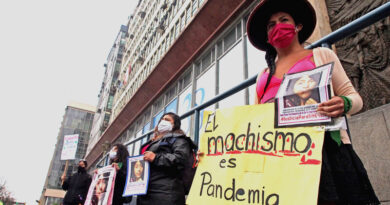
Until recently, men have dominated drug trafficking. Government crackdowns on drug trafficking organizations (DTOs) have noticeably increased women’s involvement in drug trafficking. Drug trafficking affects women directly via their participation, as well as indirectly via sex trafficking, prostitution, and associations with DTO members. Drug trafficking has increased the crime rate in Latin America, creating problems for the prison systems and unleashing a phenomenon known as “femicide.” While men have predominantly run drug trafficking organizations...

Read more »

Scientific Progress at an Inhuman Cost

This analysis was prepared by COHA Research Associate Linnea LaMon
October 11, 2011

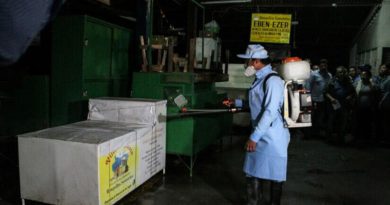
Source: National Library of Medicine From 1946 to 1948, the United States conducted medical research in Guatemala to determine the effectiveness of penicillin in preventing and treating sexually transmitted diseases, including syphilis, gonorrhea, and chancroid. To carry out their study, U.S. researchers knowingly infected Guatemalan prisoners, prostitutes, mentally ill patients, and soldiers with multiple illnesses by means of experimental inoculations and direct contact with infected participants. More than 1,500 subjects were exposed to a variety of...

Read more »

Central American Migrants in Mexico: Lost in a Black Hole of Violence

This analysis was prepared by COHA Research Associate Natalia Cote-Muñoz
September 7, 2011

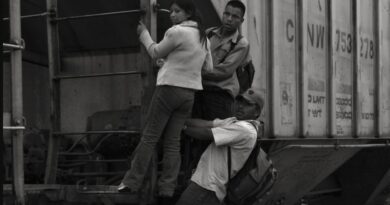
Every year, 500,000 Central Americans pass through Mexico on an invariably dangerous journey to the United States in search of better opportunities, but it is unknown how many reach their intended destination. Migrants are regularly treated as second-class citizens during their journey; many fall victim to the violence of criminal gangs, resulting in assaults, sexual slavery, kidnapping, or murder. Civil society organizations often advocate the protection of migrant rights; however, in response to a...

Read more »